How to Turn a Pet Photo into a Painting That Still Looks Like Your Pet
Painting a pet is not the same as making them prettier. The moment the brushwork starts competing with the markings, the portrait stops being them. Here is how to keep the animal while changing everything around them.
Ces guides sont pour l’instant en anglais. L’interface est traduite en premier, les articles suivent.
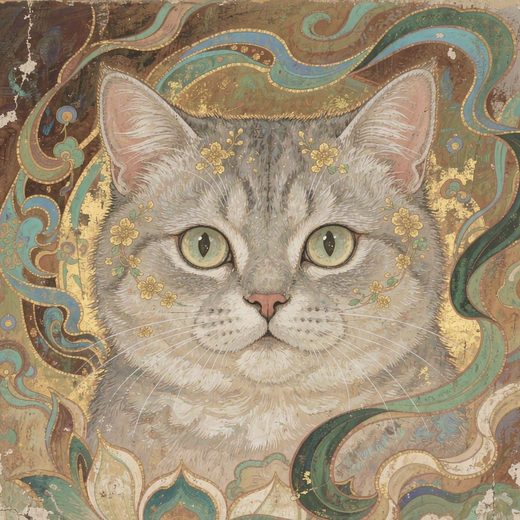
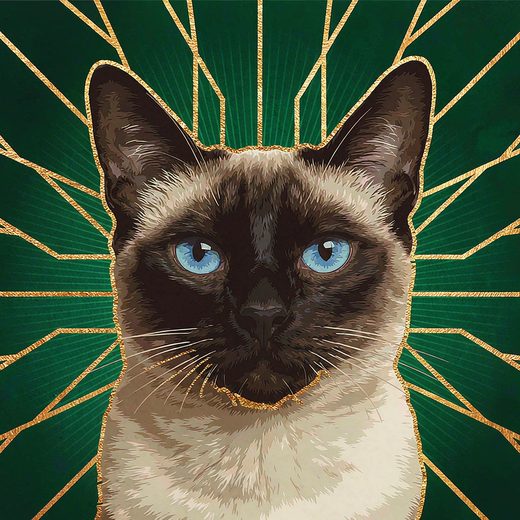
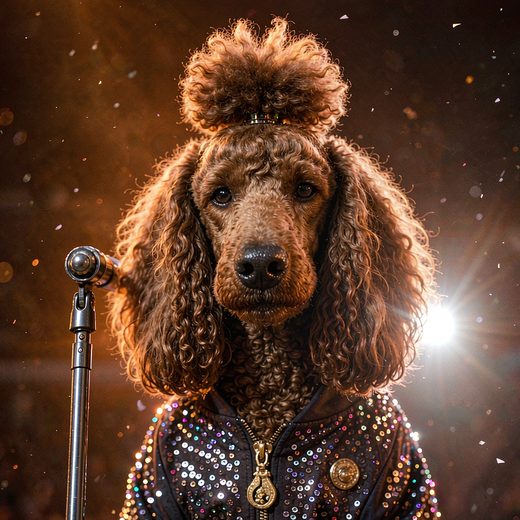
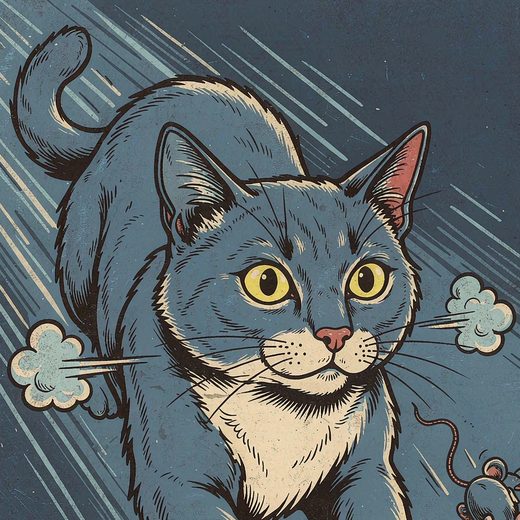
Painted pet portraits tend to fail in the same three ways: the face drifts into a breed stereotype, the palette rewrites the fur, or the props take over. All three are decided before any paint is applied — by the photo you choose and the style you ask for, not by how many times you press generate.
Start with a photo that has something to lose
The best source photo is not the prettiest one. It is the one where your pet is most legible: the eye shape, the set of the ears, the pattern only they have. A slightly dark phone snap of them looking straight at you usually beats a soft-focus beauty shot where the face is half turned away.
- One animal in frame. With two, something has to guess which head belongs to which body.
- Both eyes visible and open, facing the camera or at a three-quarter angle.
- Natural light. A window beats a flash, which flattens the fur and blows out the markings you are trying to keep.
- No sunglasses, heavy filters, or costume already on. The style brings its own props; two sets of them fight.
- Sharp enough that the markings are distinct. If you cannot read the fur pattern in the photo, a painting cannot either.
Choose a style by what it does to fur, not by how it looks on a wall
Most style galleries show a finished result and leave you to imagine your pet inside it. A more useful question is how the medium treats the parts that make your pet recognisable. Watercolour keeps a surprising amount of pattern because the washes are transparent — dark markings survive as darker pigment. Heavy oils are the opposite: they replace pattern with brushstroke, which is gorgeous on a black cat and risky on a tortoiseshell.
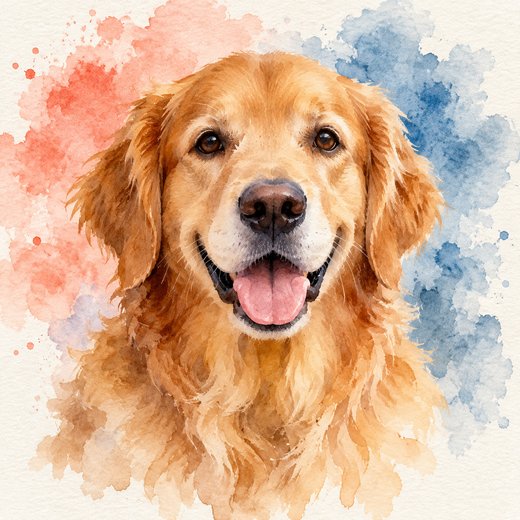
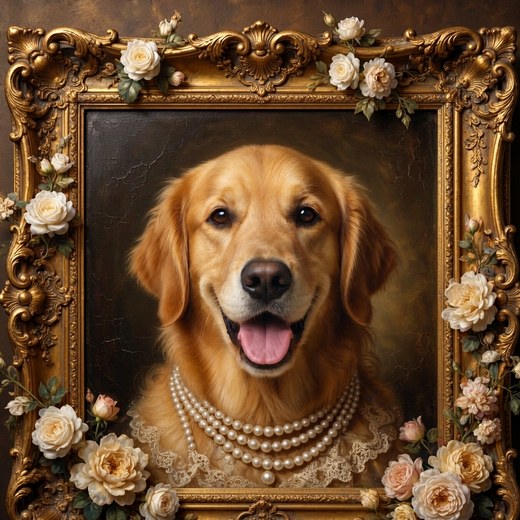
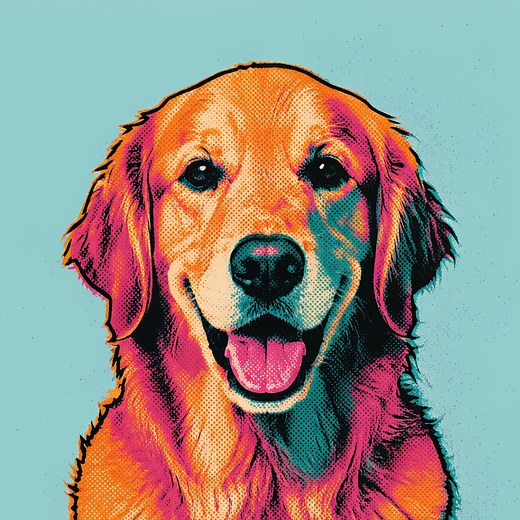
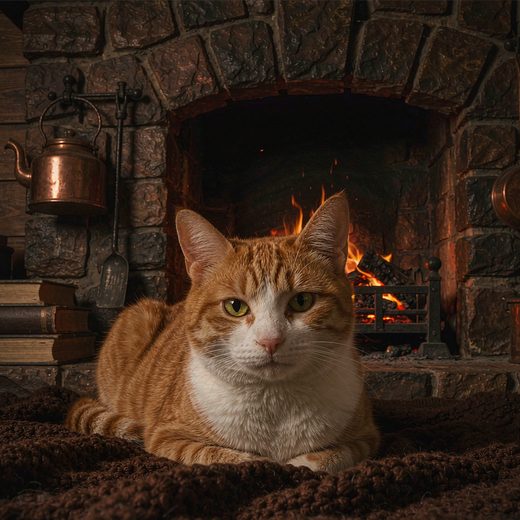
That is the trade-off in one line: the flatter and more graphic the style, the more of your pet's small asymmetries get simplified away. Reach for graphic styles when the silhouette is already unmistakable — a shiba, a husky, a ginger cat. Reach for painterly ones when the identity lives in the detail.
The three failures worth checking first
- The face becomes an average of the breed. Fix the photo before the style: a sharper, more frontal source is worth more than any wording.
- The fur changes colour. This happens when a style's palette overrides the photo. Transparent, restrained palettes preserve original colour far better than saturated ones.
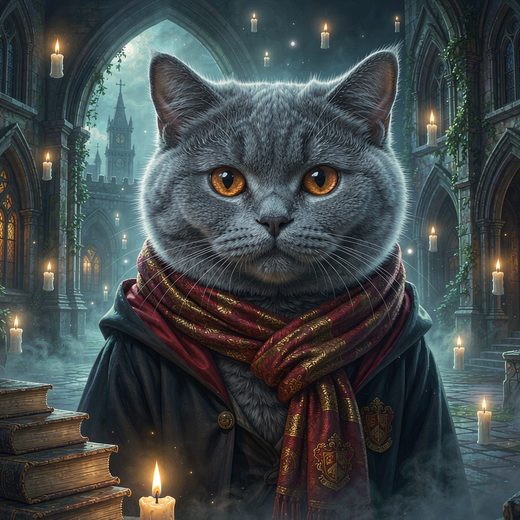
- The props take over. Crowns, capes and paper bags are fun, but if a prop covers the ears or the chest markings, you have painted an outfit with a pet in it.
What to write in a prompt, and what to leave out
If your tool takes a text prompt, describe the medium and the light, not the animal. The animal is already in the photo; typing 'a cute golden retriever with soft fur' invites a generic retriever back instead of yours. Name the paint, the paper, the light direction and the background, then say what must not change: face shape, markings, eye colour, expression.
With our own generator there is nothing to type. Each of the sixty-six styles is already a written brief, and the first line of every brief is to keep the animal's identity exactly as in the source photo. Which is why the photo matters more than any setting on the page.
How large should the painting be?
A 4K file is 4096 pixels on the long edge, which prints at 16×20 inches without upscaling. If the portrait is going on a wall, generate at 4K. If it is going into a group chat, 1K is indistinguishable on a phone and arrives sooner.
Questions fréquentes
Can I paint a pet who has passed away, from an old photo?
Yes, and old photos often work better than people expect. What matters is that the face is in focus. A soft scanned print will produce a softer likeness — a style cannot recover detail that is not in the pixels.
Why does my dog look like a different dog in some styles?
Because graphic styles simplify fur pattern into flat shapes. If your dog's identity lives in a subtle marking, choose a transparent, painterly style instead of a high-contrast one.
Do I need to remove the background first?
No. The style replaces the background entirely, so a cluttered sofa or a kitchen floor makes no difference to the result.