AI Pet Cartoon: How to Keep It Cute Without Losing the Pet
A cartoon is the easiest way to make a pet look adorable and the easiest way to lose them entirely. The difference is not the cuteness — it is how much of the animal survives the simplification.
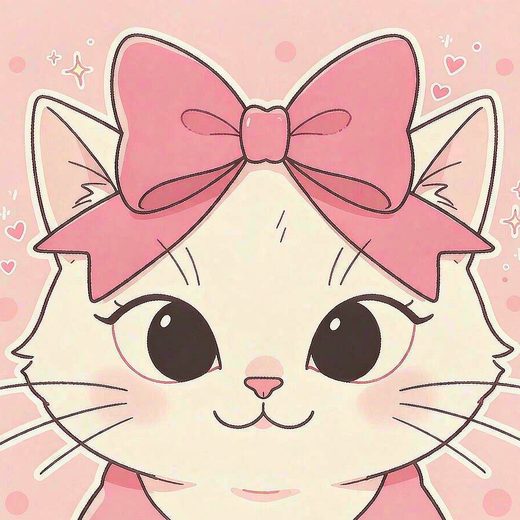
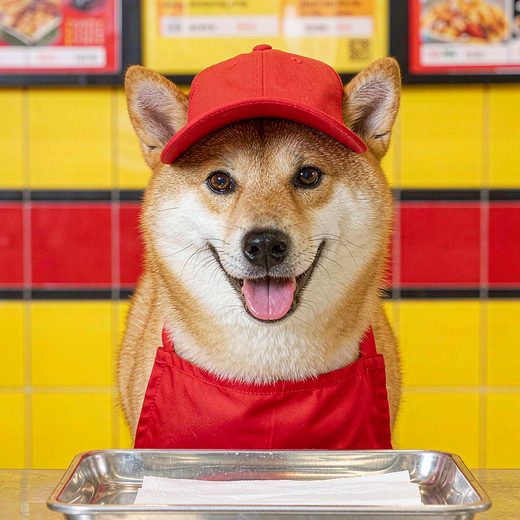
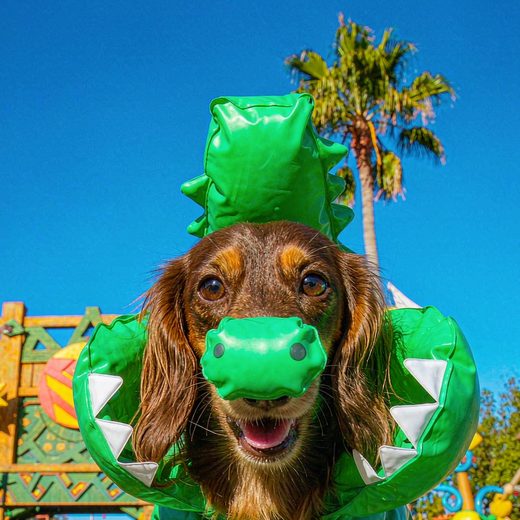
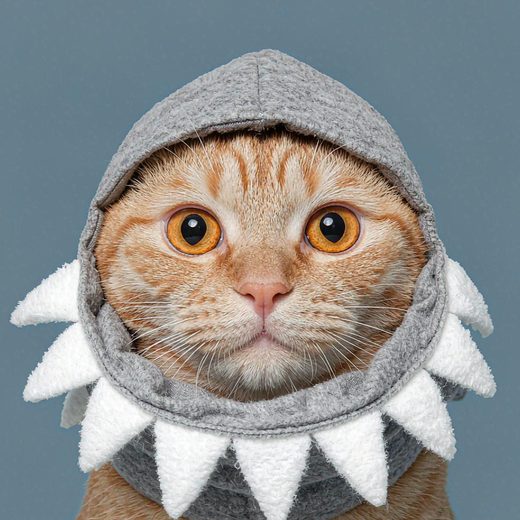
Ask ten people to draw your cat and you get ten cartoons, all cute, none of them your cat. That is the same failure an AI cartoon tends to produce: the model has seen millions of adorable cats and it will happily draw the average of them. Keeping your specific animal in a cartoon is a matter of knowing what the simplification is allowed to touch.
What actually makes a cartoon cute
Cuteness in cartoon animals comes from a small number of structural moves, and none of them is 'more detail':
- A slightly oversized head and a shortened muzzle. This is the single biggest lever, and it is also the one that most changes the face.
- Large eyes with a clear highlight, set wide. Eye shape carries more identity than eye size — keep the tilt and the set, exaggerate the size.
- Soft, rounded silhouettes. Sharp corners read as adult or villainous; rounded reads as young.
- Simplified fur that keeps the patches. Fur becomes shapes — but the shapes should still be in the right places.
Two very different things people call 'cartoon'
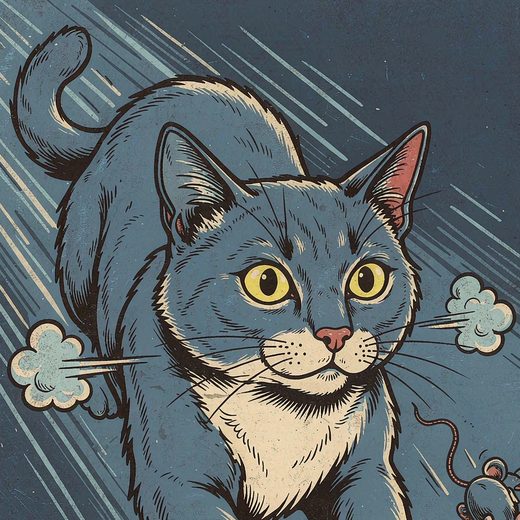
A 3D animated render and a flat graphic illustration are both cartoons, and they behave completely differently with a pet photo. The 3D render keeps volume, fur direction and lighting, so it can hold a fairly faithful face — it looks like your animal in a feature film. The flat illustration throws away volume and lighting on purpose, keeping shape and colour, which is more stylish and much less forgiving: every asymmetry in the face is now a design decision.
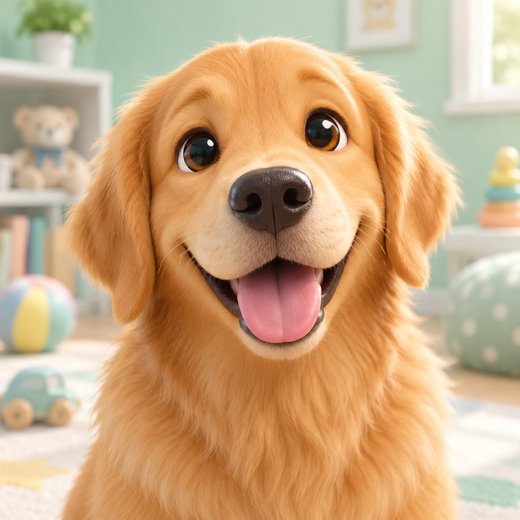
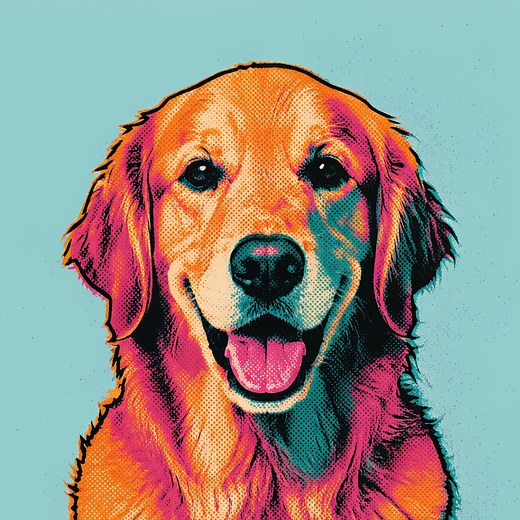
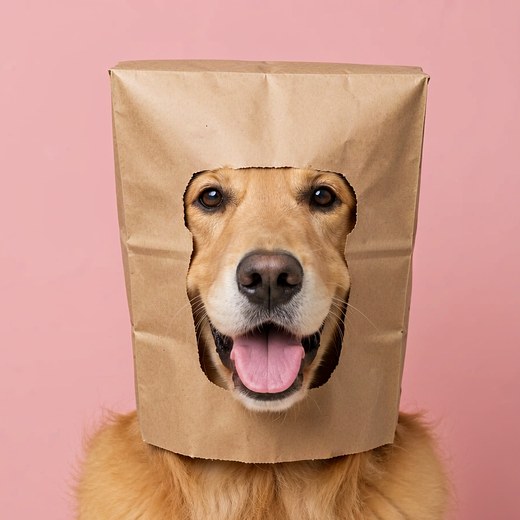
Practical rule: if you want people to say 'that's exactly Miso', choose the render. If you want them to say 'that's adorable, who made it', choose the print. Both are valid — they answer different questions.
Markings are the identity, not the detail
Cartoons simplify fur into flat shapes, and that is where markings get quietly deleted — a white blaze becomes a generic white face, a patch over one eye disappears, a tabby's stripes turn into three decorative commas. Those markings are what makes the animal recognisable at a glance, so they should be the last thing simplified, not the first.
This is also why the source photo matters more in cartoon styles than anywhere else: a model working from a photo where the pattern is clear has something to keep. A model working from a dark, blurry photo has to invent fur, and invented fur is generic fur.
Where a cartoon version earns its keep
A cartoon is usually the wrong choice for a framed wall portrait and the right choice for everything printed small: birthday invitations, thank-you cards, stickers, a kid's bedroom door, a mug, a profile picture. Flat, high-contrast styles survive being shrunk to 30 mm; painterly ones turn to mud.
Three quick fixes when it comes back wrong
- It looks like a different breed. Use a more frontal photo with the whole face in frame; a three-quarter turn is what pushes the model towards a stereotype.
- It looks like a plush toy. That is an over-simplified style rather than a photo problem — move to a render style, or accept it as a toy and use it for stickers.
- The colours are wrong. Check the photo first: warm indoor light makes a grey cat look brown, and the model will faithfully copy the cast.
Frequently asked questions
Which cartoon style keeps the pet most recognisable?
The 3D animated render, because it keeps volume, fur direction and lighting. Flat graphic styles are more stylish but simplify the face far more.
Can I use the result commercially?
For your own pet's images, printing cards or stickers for yourself and friends is fine. Anything sold commercially, or any use of someone else's pet photo, needs the rights — see the Terms of Service.
Does a cartoon need a better photo than a painting?
Yes, usually. Simplification removes the small cues that carry identity, so a clearer view of the face and markings gives the style more to hold on to.