Dog Portrait Ideas That Don't Look Like Stock Photos
A stock photo of a golden retriever is a picture of a breed. A portrait of your dog is a picture of one specific animal who steals socks. The difference is never the brush — it is how much of the dog you let into the frame.
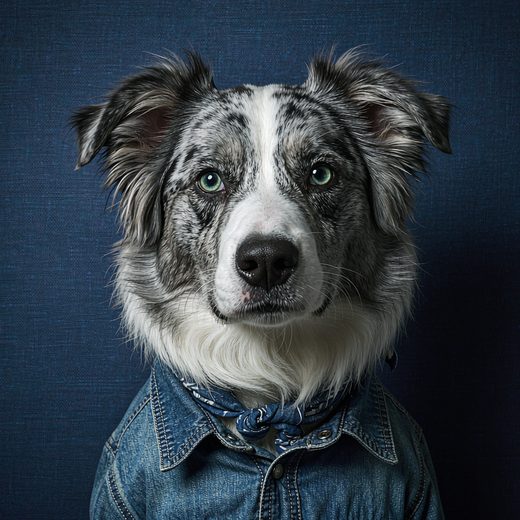
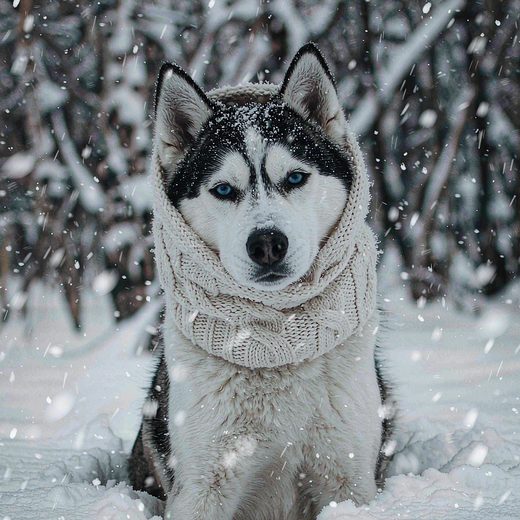
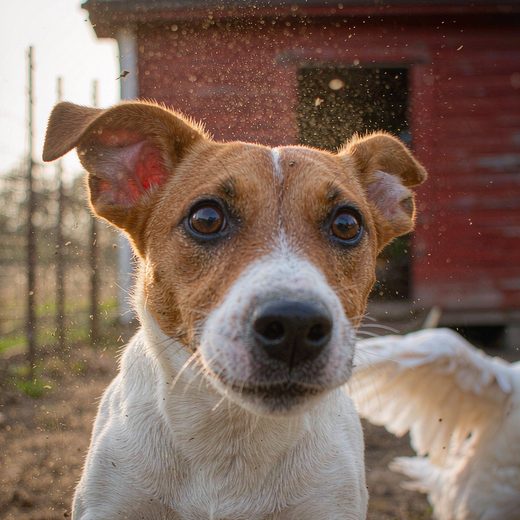
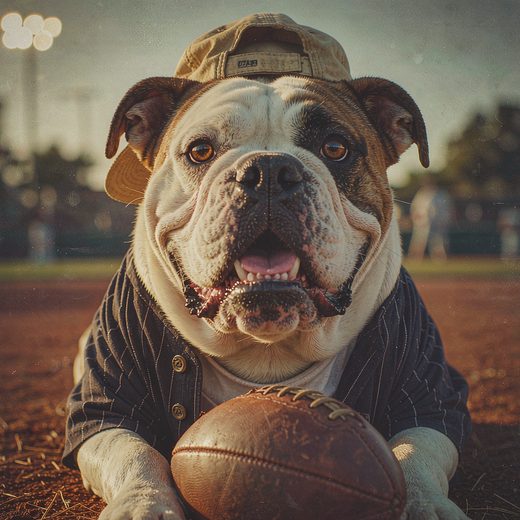
Most dog portrait ideas are really interior-design ideas with a dog added afterwards: match the wall, match the sofa, choose a colour. That works, but it produces portraits that could belong to anyone. The ones people keep on the wall for ten years usually start from the opposite end — a specific habit, a specific expression, a specific spot on the floor — and then find a style that flatters it.
Read the dog first, then pick the room
Four temperaments cover most dogs, and each one has a style that does the work for you:
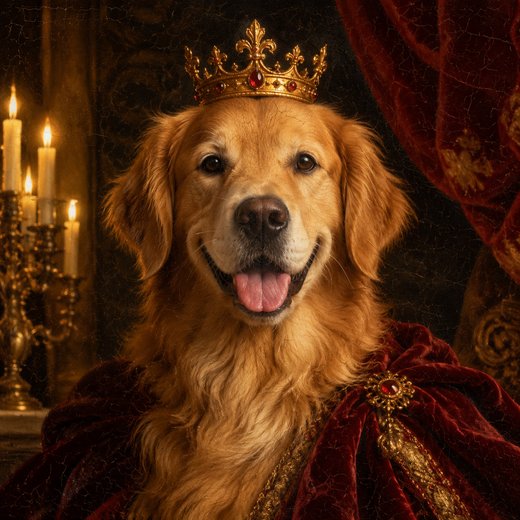
- The dignified one — sits like a landlord inspecting the rent. A royal or Renaissance oil gives that seriousness somewhere to go.
- The comedian — steals a shoe, then looks you in the eye while doing it. A 3D cartoon or the paper-bag studio shot is honest about who they are.
- The outdoor one — only fully themselves in tall grass at the end of the day. Autumn light and motion suit them better than any backdrop.
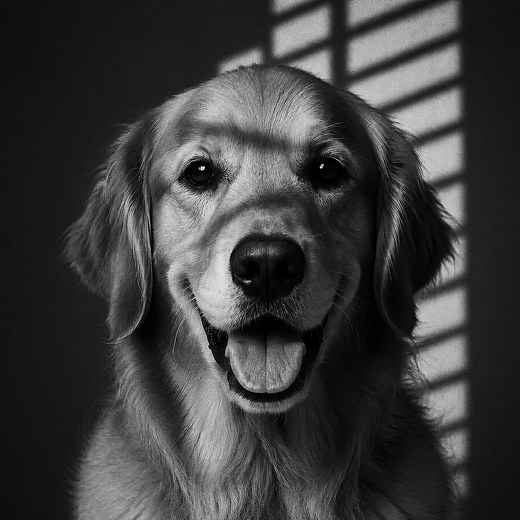
- The one who stares — sits in the doorway and watches you for no reason. High-contrast black and white was invented for that face.
Seven directions, and what each one is for
- Court portrait in oil. Best for a dog with a serious face and a good chest. Reads as an heirloom, so it wants a frame and a wall, not a phone case.
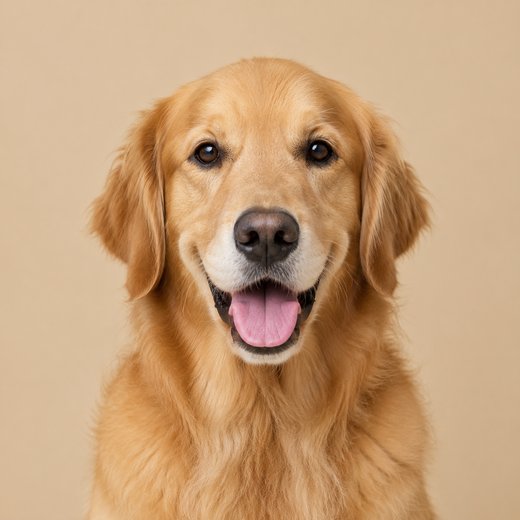
- Minimal studio. Seamless warm backdrop, softbox light, no props. The safest choice for a first portrait and the easiest to hang next to human portraits.
- Golden-hour motion. Running, ears up, grass blurring. Choose this if your favourite photos of your dog are all slightly out of focus because they would not sit still.
- Film noir. Hard slatted shadows, black and white, one hard key light. Unusually good on short-haired dogs, whose muscle and bone structure finally gets to be the subject.
- 1970s listening room. Mustard knit, wood panelling, a turntable out of focus. A gift portrait for the person who named the dog after a band.
- Storybook princess or gilded frame. Deliberately silly, deliberately beautiful. Works when the joke is shared with the recipient — otherwise it reads as a novelty.
- Pop-art screen print. Four flat colours, halftone dots, heavy outlines. The only direction here that survives being printed small, so it is the one for stickers, cards and tote bags.
Details that make it yours
The single highest-value change you can make is shooting at eye level. Photos taken while standing over a dog make them look smaller and further away; crouching to their height produces the eye contact that a portrait needs. Everything else — treats, squeaky toys, a helper waving behind your shoulder — just buys you two more seconds of attention.
Print it at a size the file can carry
A 4K portrait is 4096 pixels on the long edge and prints cleanly at 16×20 inches. At 1K, keep it to postcards and screens. If you are building a gallery wall of several pets, generate them all in the same style at the same size — mixed styles on one wall read as a mistake rather than a collection.
Three things to skip
- Costumes the dog has never worn. A hat they have never seen produces a portrait of a dog in a hat, not of your dog.
- Text on the image. Names and dates date quickly and clutter a print; put them on the frame instead.
- A style chosen only because it is trending. The portrait outlives the trend by about nine years.
Frequently asked questions
Should the whole dog be in the frame?
For a wall portrait, head and shoulders reads better: it keeps the face large enough to recognise from across a room. Full-body works for action shots, where the pose is the point.
Can I get two dogs in one portrait?
Yes — there is a two-photo mode for exactly that. Both dogs need their own clear photo; a single photo with two dogs in it usually comes back with the wrong head on the wrong body.
What if my dog will not sit still for a photo?
Use the best blurry photo you have as a reference for the face, and let a style with motion in it do the rest. A slightly imperfect photo of the right expression beats a perfect photo of the wrong one.